TL;DR
The Cost Your Invoice Is Designed Not To Show
Most finance teams can recite their processing rate to the basis point. Almost none can state their FX markup, and that is not a coincidence. The processing fee is itemized because it is competitive and quotable. The FX markup is buried inside the exchange rate because it is neither. When your gateway converts a customer's payment from their currency into your settlement currency, it applies a rate, and the gap between that rate and the true mid-market rate is pure margin that never appears as a fee on any statement.
The scale is easy to underestimate. A markup of one to three percent on the converted amount routinely exceeds the entire processing fee for a cross-border transaction. On a business moving tens of millions across borders, that is a seven-figure cost line that no one has ever benchmarked, because it does not look like a cost. It looks like the exchange rate.
This is not a problem with one provider. It is a structural transparency gap that regulators are still trying to close. The G20's cross-border payments roadmap lists disclosure of FX rates and conversion charges among its explicit transparency targets, and its own 2025 progress report concedes that improvement has been slow and uneven, with the end-2027 targets unlikely to be met on current trends [1]. Where rules do exist they are inconsistent: the UK mandates fuller FX markup disclosure, while other markets leave it voluntary, which means hidden spreads persist by default [2]. Until disclosure is mandatory everywhere, the work of finding the markup falls to you.
Where The Markup Actually Sits
To benchmark a cost you have to know where it lives. In a cross-border card transaction the spread can be applied at more than one point, and providers differ on which one they use.
The first place is at authorization and settlement, when the acquirer or gateway converts the transaction amount into your settlement currency. This is the most common location and the hardest to see, because the converted figure simply appears in your settlement report as a number. The second place is at payout, when you disburse funds in a currency other than the one you hold, and a second conversion happens on the way out. A business that collects in one currency and pays suppliers in several can be charged a markup on the way in and again on the way out, which is why the FX exposure on the payout side deserves its own scrutiny rather than being lumped into a single rate.
The third place is dynamic currency conversion at checkout, where the customer is offered to pay in their home currency and the conversion margin is shared between parties in the chain. This one is visible to the customer but rarely analyzed by the merchant as a cost to the business relationship.
How To Benchmark It, Step By Step
Benchmarking the markup is methodical, not difficult. The reference point is the mid-market rate, the midpoint between the buy and sell rates in the wholesale FX market, which is what services like a central bank reference or a neutral market feed publish. Everything is measured against that.
Start by exporting a sample of cross-border transactions for a single corridor over a defined period, with the original currency amount, the converted amount, and the timestamp. For each transaction, pull the mid-market rate at that timestamp and compute what the converted amount should have been. The difference, expressed as a percentage of the transaction, is your effective FX markup for that corridor. Repeat per corridor, because the markup is rarely uniform: high-volume corridors may be tighter and thin corridors much wider. Weight by volume to get a blended cost, but keep the per-corridor numbers, because that is where the negotiation lives.
What Good Looks Like, And What To Demand
Once you have the number, you have leverage. The benchmark conversation with a provider should be specific: here is the effective markup we measured on this corridor, here is the mid-market reference, show us how you price it. The strongest providers treat this as a normal request and quote the mid-market rate alongside a transparent margin. The weakest treat your settlement export as the only source of truth, which is exactly the opacity the G20 roadmap is trying to legislate away.
Three demands are reasonable to put in writing during any review of payment gateway pricing. First, the mid-market reference rate shown next to the rate actually applied, per transaction or at least per corridor. Second, a single transparent FX margin rather than a spread that moves without explanation. Third, the same transparency on the payout leg as on acceptance, so a second hidden conversion is not reintroduced when you disburse. If a provider cannot or will not meet these, the markup is almost certainly a profit center they would rather you not measure.
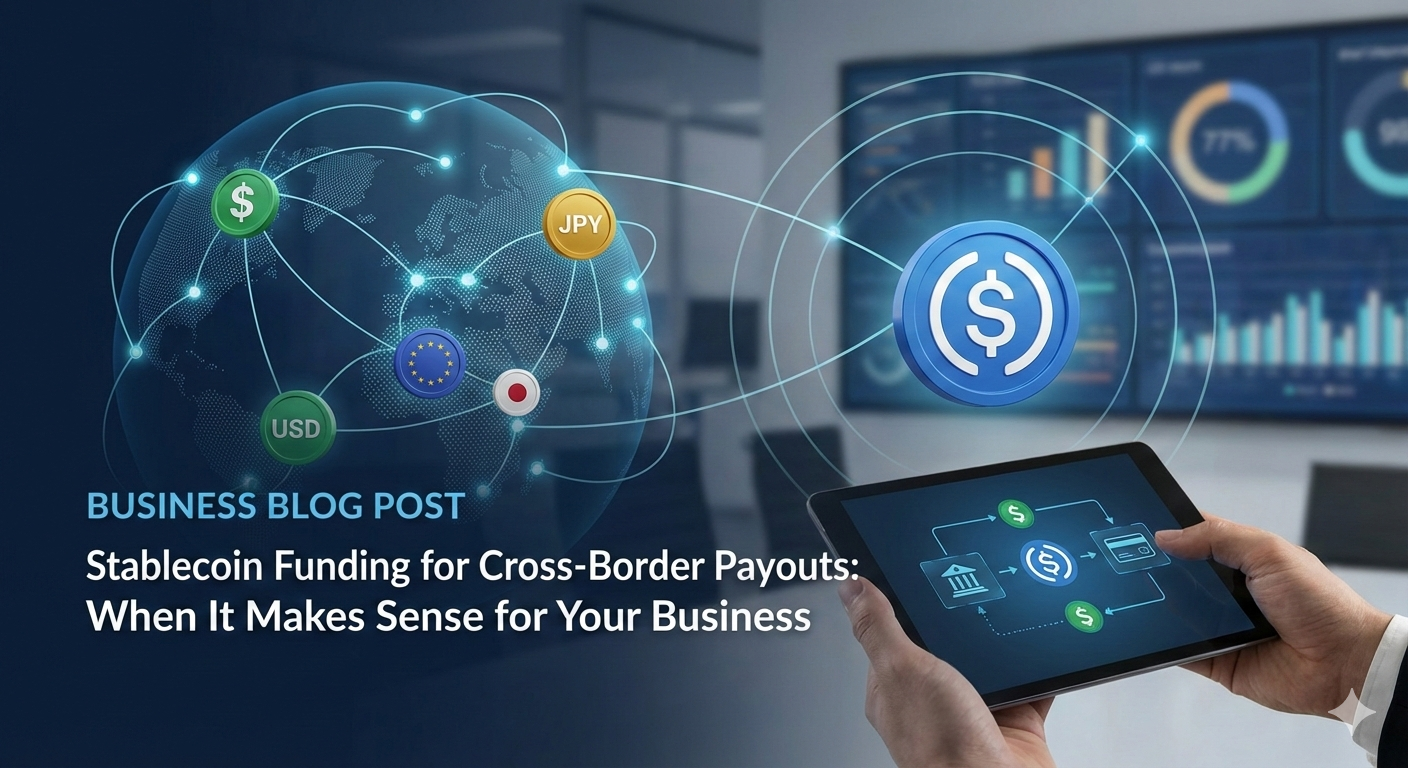
There is also a structural fix beyond negotiation. Settling part of the flow over stablecoin rails collapses the conversion economics, because the all-in cost of moving regulated digital dollars runs an estimated 0.1 to 0.5 percent against the 2 to 7 percent true cost of traditional cross-border transfers [3], and the World Bank's Q3 2025 data still puts the global average for cross-border transfers at 6.36 percent [4]. For corridors where the markup is widest, a stablecoin payout leg through Tazapay Canada Corp. can remove the spread you have been paying twice.
Turn The Benchmark Into A Standing Control
The point of benchmarking the markup once is to never not know it again. Make the effective FX markup a standing line in your payments reporting, refreshed each quarter, broken out by corridor. The first time you run it, the number will likely surprise the finance team, because a cost that has been invisible for years tends to be larger than anyone guessed. After that, it becomes a managed cost like any other, with a target, an owner, and a trend.
This is the discipline that separates teams who control their cross-border economics from teams who are controlled by them. The processing rate gets all the attention because it is visible. The FX markup deserves more, because it is usually larger and almost always unmeasured. For teams running a full provider review, this benchmark belongs alongside the broader work of evaluating an international payment gateway, where FX transparency is one of the six questions that actually separate providers.
Sources
[1] Financial Stability Board. "G20 Roadmap for Cross-border Payments: Consolidated progress report for 2025." October 2025. https://www.fsb.org/2025/10/g20-roadmap-for-cross-border-payments-consolidated-progress-report-for-2025/
[2] Wise. "G20 Roadmap for Enhancing Cross-border Payments, One Year On." 2025. https://wise.com/p/g20-report-2025
[3] EY. "Cost savings and speed drive stablecoin adoption." 2025. https://www.ey.com/en_us/insights/financial-services/cost-savings-and-speed-drive-stablecoin-adoption
[4] World Bank. "Remittance Prices Worldwide, Issue 54." September 2025. https://remittanceprices.worldbank.org/sites/default/files/2026-04/RPW_main_report_and_annex_Q325.pdf